生殖医学・妊活
妊娠可能期間(受胎可能期間)の科学:最も妊娠しやすいピーク日の臨床ガイド
排卵前5日間と排卵日当日の合計6日間にわたる生殖可能期間、精子と卵子の生存時間、ウィルコックス研究による日別妊娠確率と最適なタイミングの科学的解説。
サラ・ジェンキンス医師, MD, FACOG12分で読める
黄体期の個別設定に対応。排卵予定日、妊娠検査薬が使える日、出産予定日を算出します。
Board-Certified Obstetrician & Gynecologist • Johns Hopkins MD • Harvard Residency • Fellow of the American College of Obstetricians and Gynecologists
従来の簡易計算機や公的ツールとの機能比較
| 機能・項目 | Free Ovulation Tracker(当ツール) | 従来型計算機 |
|---|---|---|
| 黄体期の日数調整(10〜18日) | ✓ 可能(個人差に合わせた高精度) | ✗ 14日固定 |
| 生理不順・不規則周期への対応 | ✓ 可能(変動を考慮した期間算出) | ✗ 非対応 |
| 日別妊娠確率パーセント表示 | ✓ 対応(グラフ表示) | ✗ なし |
| カレンダー同期・.ics書き出し | ✓ Google・Apple・Outlook | 限定的 |
| 先6周期の未来予測 | ✓ 可能(一覧表) | ✗ 1周期のみ |
| 出産予定日&星座の表示 | ✓ あり | ✗ なし |
| 多言語対応 | ✓ 世界18言語 | 少数 |
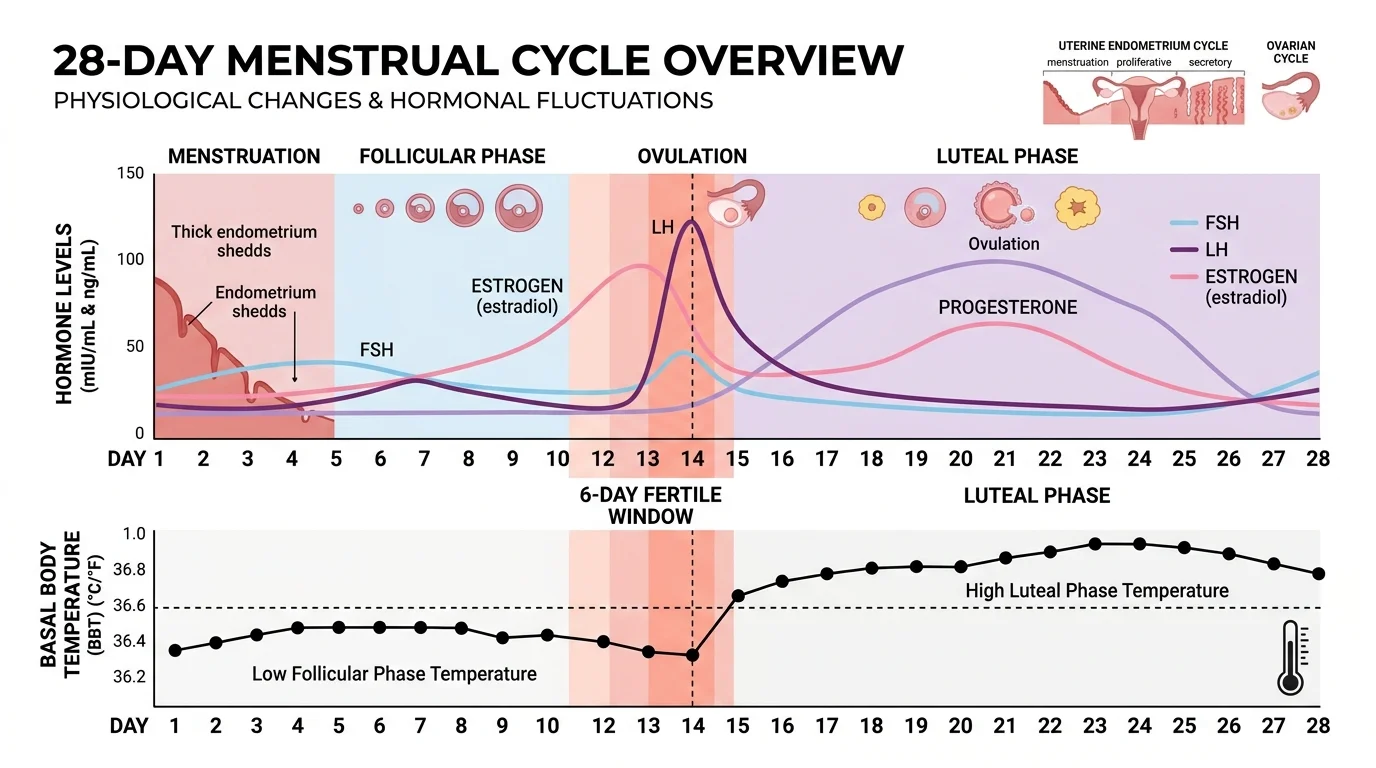
妊娠が生物学的に成立するのは、排卵前の5日間と排卵日当日の合計6日間のみです。
受精可能なおりものの中では最長120時間生存し、卵子を待ち受けます。
排卵された卵子は、24時間以内に受精する必要があります。
排卵日の1〜2日前のタイミングが最も受胎率が高くなります(約31%)。
カレンダーの計算と併せて以下の変化をチェックしましょう:
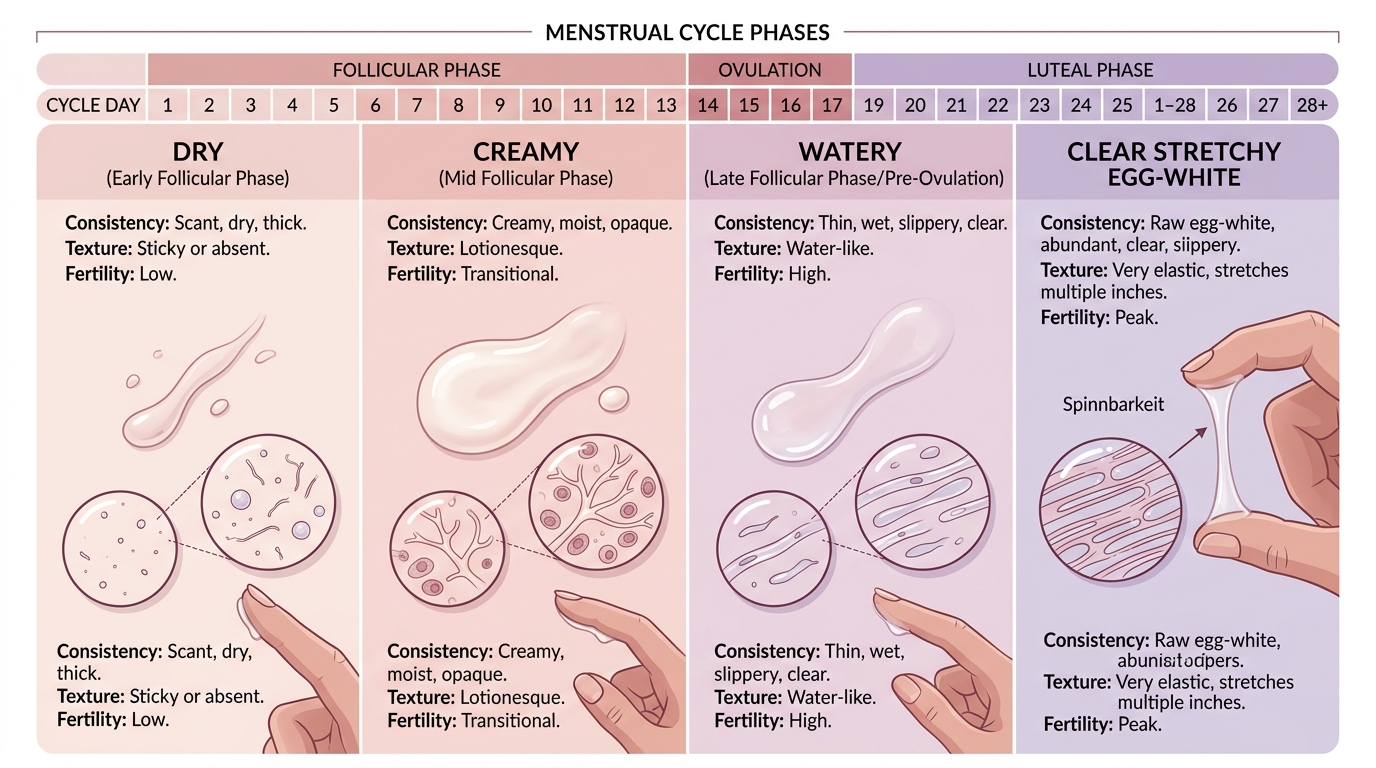
エストロゲンの分泌ピーク時に卵白状になります。
排卵後にプロゲステロンの作用で体温が上がります。
判定ラインが濃くなった24〜36時間後に排卵が起こります。
排卵日計算や生理周期に関する臨床的Q&A
専門知識をもとに女性のサイクルと妊活をサポートする専門記事
排卵前5日間と排卵日当日の合計6日間にわたる生殖可能期間、精子と卵子の生存時間、ウィルコックス研究による日別妊娠確率と最適なタイミングの科学的解説。
The algorithmic models powering Free Ovulation Tracker are grounded in established gynecological physiology and peer-reviewed reproductive science.
Standard clinical calendar models assume an invariant 14-day luteal phase. However, physiological research published by theAmerican College of Obstetricians and Gynecologists (ACOG) — Evaluating Infertility & Ovulationdemonstrates that healthy luteal phases range between 10 and 17 days. Our calculation algorithm enables individual luteal duration calibration (defaulting to 14 days) to accurately back-calculate ovulation day: Ovulation Day = Cycle Length - Luteal Phase.
The biological fertile window spans precisely six days: the five days preceding ovulation plus ovulation day itself. In the landmark clinical study published in theWilcox et al., New England Journal of Medicine (NEJM), researchers demonstrated that viable sperm can survive up to 5 days in estrogenic cervical mucus, while the unfertilized oocyte remains viable for 12–24 hours post-follicular rupture.
Luteinizing Hormone (LH) surges 24–36 hours prior to follicular rupture, prompting final oocyte maturation. Our platform integrates secondary biomarker guidance in alignment withNational Institutes of Health (NIH/PubMed)findings, advising users to pair calendar predictions with urine ovulation predictor kits (OPKs) for pinpoint accuracy during irregular cycles.
Progesterone secretion from the corpus luteum elevates Basal Body Temperature (BBT) by 0.5°F–1.0°F (0.3°C–0.6°C) within 48 hours post-ovulation, confirming release retrospectively. In accordance withWorld Health Organization (WHO)reproductive protocols, tracking fertile "egg-white" cervical mucus (spinnbarkeit) provides real-time confirmation of maximum conception probability.