Memahami Masa Subur Anda: Panduan Klinis Lengkap Hari Puncak Kesuburan
Ulasan ilmiah mengenai masa subur biologis 6 hari, kelangsungan hidup sel sperma dan sel telur, probabilitas kehamilan harian menurut studi Wilcox, dan waktu berhubungan terbaik.
Hitung jendela masa subur, hari ovulasi, dan waktu tepat tes kehamilan.
Board-Certified Obstetrician & Gynecologist • Johns Hopkins MD • Harvard Residency • Fellow of the American College of Obstetricians and Gynecologists
Bandingkan fitur klinis kami dengan kalkulator online konvensional
| Fitur | Free Ovulation Tracker (Kami) | Kalkulator Konvensional |
|---|---|---|
| Kustomisasi Fase Luteal (10-18 hari) | ✓ Ya (Akurasi Personal) | ✗ Kaku (hanya 14 hari) |
| Dukungan Siklus Tidak Teratur | ✓ Ya (Rentang adaptif) | ✗ Tidak ada |
| Peluang Harian Berbasis Persentase | ✓ Ya | ✗ Tidak ada |
| Sinkronisasi Kalender (.ics) | ✓ Google, Apple, Outlook | Terbatas |
| Prediksi 6 Siklus ke Depan | ✓ Ya | ✗ Hanya 1 siklus |
| Perkiraan Tanggal Lahir & Zodiak | ✓ Ya | ✗ Tidak ada |
| Dukungan Multibahasa | ✓ 18 Bahasa Dunia | Terbatas |

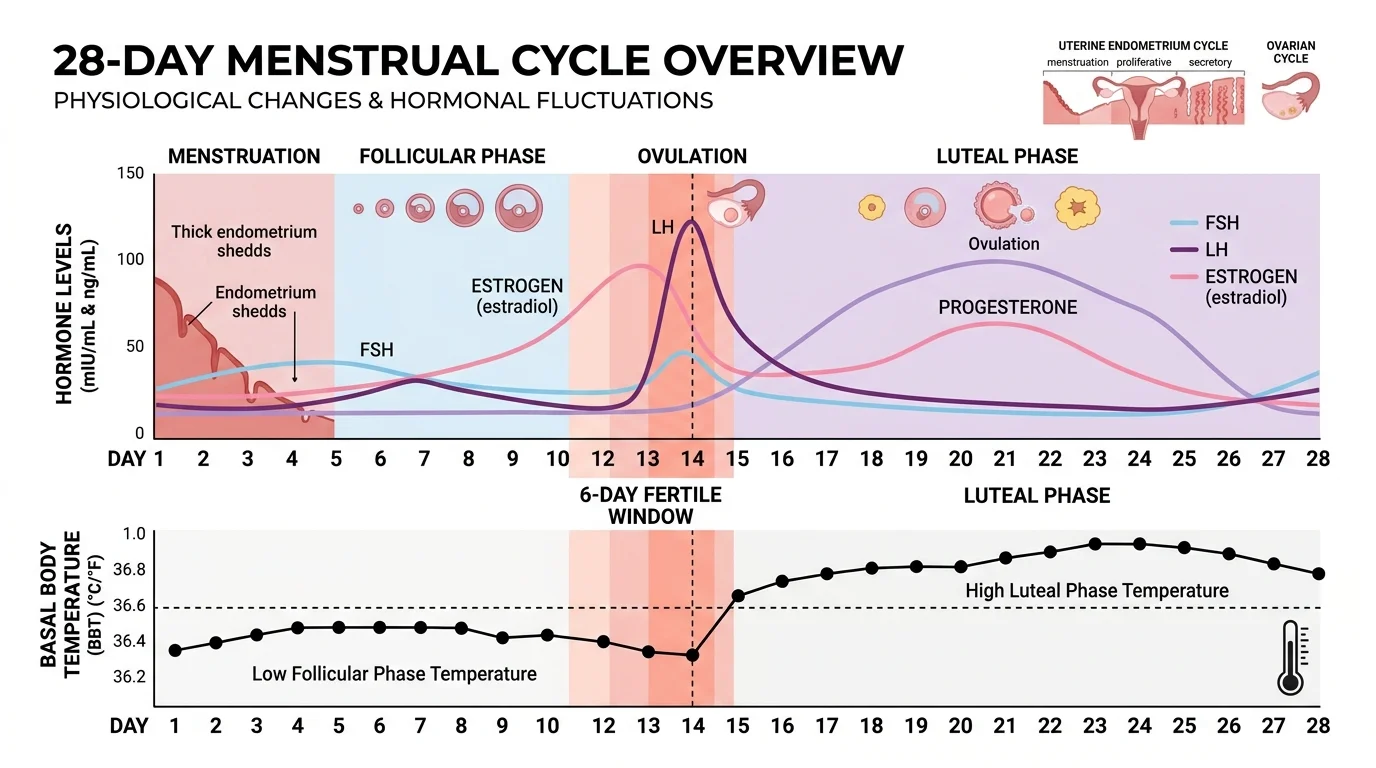
Kehamilan secara biologis hanya mungkin terjadi dalam rentang 6 hari pada setiap siklus menstruasi.
Dapat bertahan hidup di dalam lendir serviks yang subur selama 120 jam menunggu sel telur.
Setelah dilepaskan, harus dibuahi dalam waktu 24 jam sebelum luruh.
Berhubungan intim 1-2 hari sebelum ovulasi memberikan peluang tertinggi (~31%).
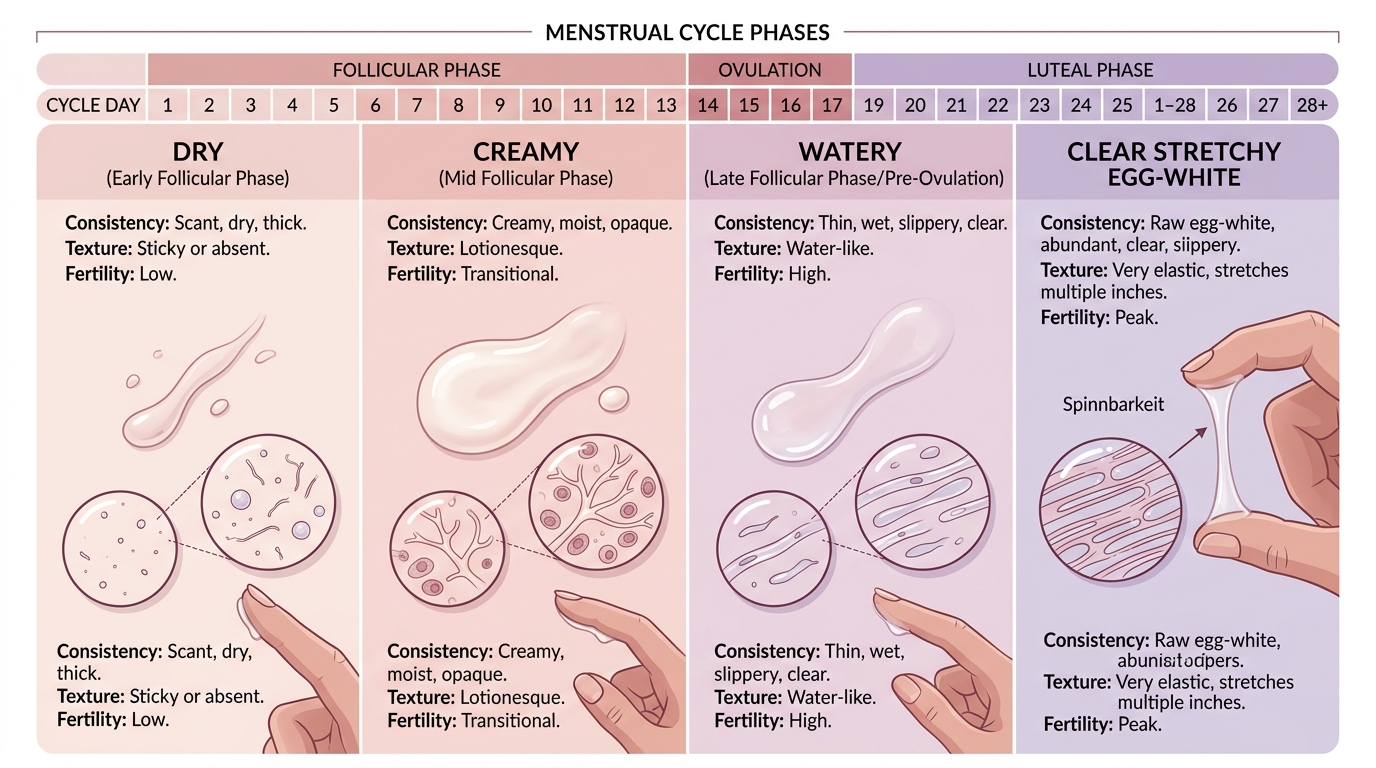
Perhatikan tanda-tanda biologis alami berikut:
Sangat elastis dan bening saat estrogen mencapai puncak.
Suhu tubuh sedikit meningkat setelah ovulasi berlangsung.
Menandakan ovulasi akan terjadi dalam 24-36 jam ke depan.

Jawaban berbasis medis seputar siklus haid, ovulasi, dan masa subur
Artikel mendalam seputar kesehatan reproduksi dan program kehamilan
Ulasan ilmiah mengenai masa subur biologis 6 hari, kelangsungan hidup sel sperma dan sel telur, probabilitas kehamilan harian menurut studi Wilcox, dan waktu berhubungan terbaik.
Penjelasan klinis tentang fase luteal, produksi hormon progesteron oleh korpus luteum, dan proses implantasi embrio.
Cara mendeteksi ovulasi melalui pengamatan lendir leher rahim dan pencatatan grafik suhu basal tubuh.
The algorithmic models powering Free Ovulation Tracker are grounded in established gynecological physiology and peer-reviewed reproductive science.
Standard clinical calendar models assume an invariant 14-day luteal phase. However, physiological research published by theAmerican College of Obstetricians and Gynecologists (ACOG) — Evaluating Infertility & Ovulationdemonstrates that healthy luteal phases range between 10 and 17 days. Our calculation algorithm enables individual luteal duration calibration (defaulting to 14 days) to accurately back-calculate ovulation day: Ovulation Day = Cycle Length - Luteal Phase.
The biological fertile window spans precisely six days: the five days preceding ovulation plus ovulation day itself. In the landmark clinical study published in theWilcox et al., New England Journal of Medicine (NEJM), researchers demonstrated that viable sperm can survive up to 5 days in estrogenic cervical mucus, while the unfertilized oocyte remains viable for 12–24 hours post-follicular rupture.
Luteinizing Hormone (LH) surges 24–36 hours prior to follicular rupture, prompting final oocyte maturation. Our platform integrates secondary biomarker guidance in alignment withNational Institutes of Health (NIH/PubMed)findings, advising users to pair calendar predictions with urine ovulation predictor kits (OPKs) for pinpoint accuracy during irregular cycles.
Progesterone secretion from the corpus luteum elevates Basal Body Temperature (BBT) by 0.5°F–1.0°F (0.3°C–0.6°C) within 48 hours post-ovulation, confirming release retrospectively. In accordance withWorld Health Organization (WHO)reproductive protocols, tracking fertile "egg-white" cervical mucus (spinnbarkeit) provides real-time confirmation of maximum conception probability.