Sains Kesuburan
Memahami Jendela Kesuburan: Panduan Klinikal Hari Puncak Kesuburan
Kajian saintifik tentang jendela kesuburan 6 hari, jangka hayat sperma dan ovum, serta masa hubungan intim yang terbaik.
Dr. Sarah Jenkins, MD, FACOG12 min bacaan
Kira jendela kesuburan, hari ovulasi dan tarikh ujian kehamilan dengan mudah.
Board-Certified Obstetrician & Gynecologist • Johns Hopkins MD • Harvard Residency • Fellow of the American College of Obstetricians and Gynecologists
Bandingkan ketepatan ciri klinikal kami dengan kalkulator tradisional
| Ciri-ciri | Free Ovulation Tracker (Kami) | Kalkulator Konvensional |
|---|---|---|
| Penyesuaian Fasa Luteal (10-18 hari) | ✓ Ya (Ketepatan Peribadi) | ✗ Tetap 14 hari |
| Sokongan Kitaran Tidak Teratur | ✓ Ya (Julat anjal) | ✗ Tiada |
| Peratusan Peluang Harian | ✓ Ya | ✗ Tiada |
| Penyelarasan Kalendar (.ics) | ✓ Google, Apple, Outlook | Sebahagian |
| Ramalan 6 Kitaran | ✓ Ya | ✗ 1 kitaran sahaja |
| Tarikh Bersalin & Zodiak | ✓ Ya | ✗ Tiada |
| Sokongan Pelbagai Bahasa | ✓ 18 Bahasa Dunia | Terhad |
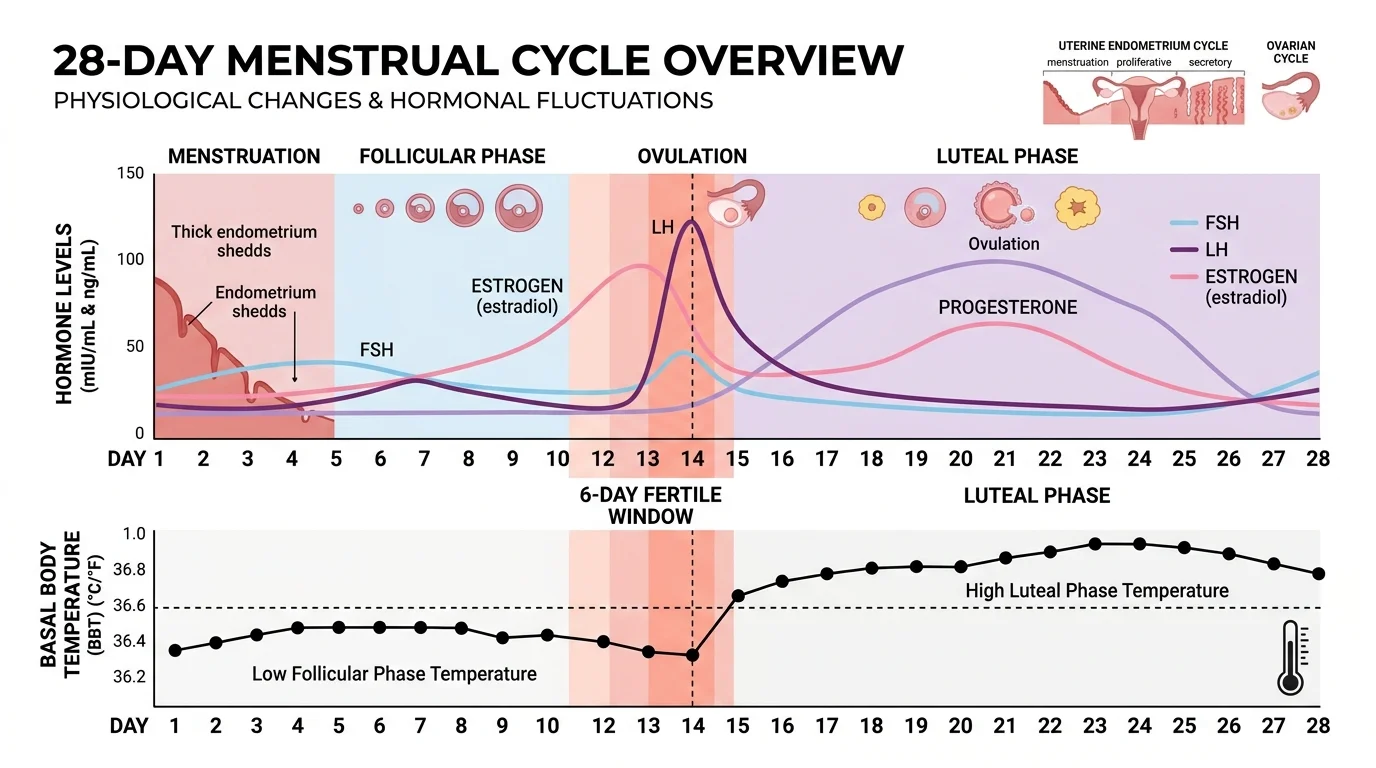
Kehamilan secara biologi hanya boleh berlaku dalam tempoh 6 hari setiap kitaran.
Boleh bertahan hidup di dalam cecair serviks yang subur selama 120 jam menunggu telur.
Mesti disenyawakan dalam tempoh 24 jam selepas dilepaskan.
Bersama 1-2 hari sebelum ovulasi menghasilkan peluang kehamilan tertinggi (~31%).
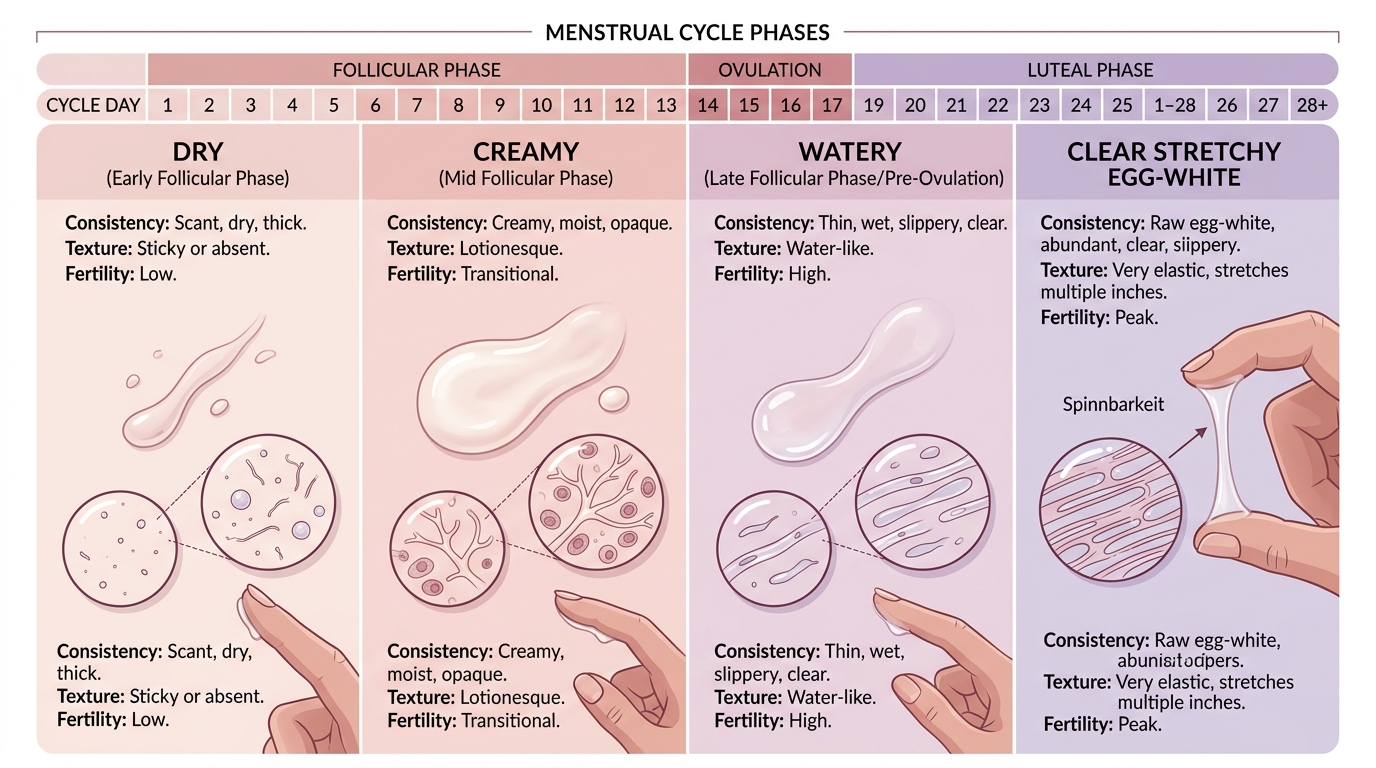
Perhatikan tanda-tanda semula jadi ini:
Sangat kenyal dan jernih ketika estrogen memuncak.
Suhu badan naik sedikit selepas ovulasi berlaku.
Jalur ujian positif 24-36 jam sebelum telur dilepaskan.
Jawapan berasaskan bukti perubatan mengenai kitaran haid dan ovulasi
Artikel panduan kesihatan wanita dan perancangan kehamilan
Kajian saintifik tentang jendela kesuburan 6 hari, jangka hayat sperma dan ovum, serta masa hubungan intim yang terbaik.
Penerangan klinikal tentang fasa luteal, progesteron dan peranan korpus luteum.
Cara mengenal pasti waktu subur dengan pemantauan lendir dan suhu badan.
The algorithmic models powering Free Ovulation Tracker are grounded in established gynecological physiology and peer-reviewed reproductive science.
Standard clinical calendar models assume an invariant 14-day luteal phase. However, physiological research published by theAmerican College of Obstetricians and Gynecologists (ACOG) — Evaluating Infertility & Ovulationdemonstrates that healthy luteal phases range between 10 and 17 days. Our calculation algorithm enables individual luteal duration calibration (defaulting to 14 days) to accurately back-calculate ovulation day: Ovulation Day = Cycle Length - Luteal Phase.
The biological fertile window spans precisely six days: the five days preceding ovulation plus ovulation day itself. In the landmark clinical study published in theWilcox et al., New England Journal of Medicine (NEJM), researchers demonstrated that viable sperm can survive up to 5 days in estrogenic cervical mucus, while the unfertilized oocyte remains viable for 12–24 hours post-follicular rupture.
Luteinizing Hormone (LH) surges 24–36 hours prior to follicular rupture, prompting final oocyte maturation. Our platform integrates secondary biomarker guidance in alignment withNational Institutes of Health (NIH/PubMed)findings, advising users to pair calendar predictions with urine ovulation predictor kits (OPKs) for pinpoint accuracy during irregular cycles.
Progesterone secretion from the corpus luteum elevates Basal Body Temperature (BBT) by 0.5°F–1.0°F (0.3°C–0.6°C) within 48 hours post-ovulation, confirming release retrospectively. In accordance withWorld Health Organization (WHO)reproductive protocols, tracking fertile "egg-white" cervical mucus (spinnbarkeit) provides real-time confirmation of maximum conception probability.